
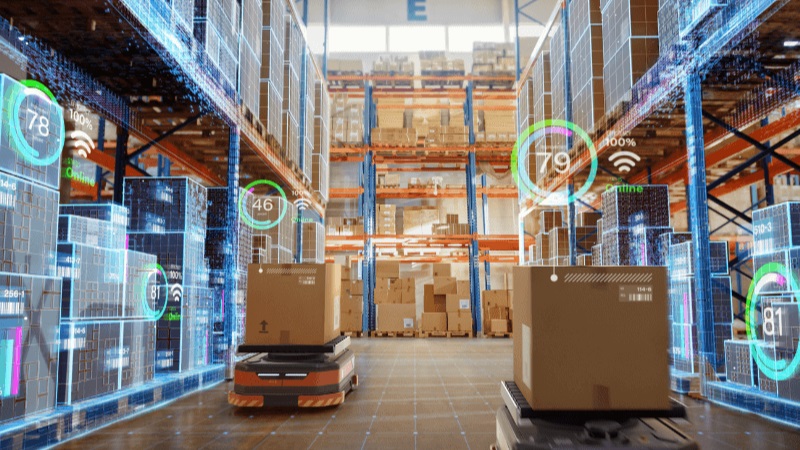

In today’s fast-paced global prudence, supply chains must be more efficient, correct, and reactive than ever before. Traditional warehouses, while productive earlier, are working to meet growing client expectations, speedy e-commerce progress, and complex logistics networks.
This is place smart warehouses are converting manufacturing. By joining automation, Artificial Intelligence (AI), and the Internet of Things (IoT), smart warehouses are setting new standards for supply chain ability.
What is a Smart Warehouse?
AI warehousing is a modern facility that uses relevant technologies to mechanize and increase operations. Unlike sensible warehouses, which are laboriously reliant on manual processes, smart warehouses depend on AI, machine judgment, sensors, and real-time data to increase accuracy, speed, and crop. Every step—from attractive merchandise to order fulfillment—is listened to and directed by intelligent plans.
Smart Warehouse Technologies
1. Machine Learning
AI plans resolve functional dossier to forecast demand, better inventory levels, and organize workflows. Machine learning algorithms continuously boost truth by leveraging information from past data, promising warehouses can behave proactively to changeful display demands.
2. Automation
Automated Guided Vehicles, computerized weapon(s), and free forklifts handle tedious and labor-intensive tasks like picking, packing, and exciting merchandise. This reduces wrongs, augments security, and hastens order accomplishment.
3. Internet of Things (IoT) Devices
Smart sensors and RFID tags path the activity of merchandise in real time.
4. Warehouse Management Systems
Cloud-located WMS programs integrate AI and IoT to collect operations. These plans provide real-time visions, mechanized planning, and guarantee efficient range utilization.
5. Data Analytics and Predictive Insights
Big file analytics helps recognize flows, predict demand pierces, and bar stockouts.
Risks of Smart Warehouses
While the benefits are main, businesses must overcome certain obstacles to adequately take advantage of the smart store. High beginning grant, integration accompanying heritage plans, and the need for employee readiness can slow down the exercise. Additionally, cybersecurity risks are intensive as warehouses depend more on affiliated ploys and cloud platforms.
The Future of Supply Chain Efficiency
The sustenance of smart warehouses is expected to invigorate as businesses seek to remain competitive in an electronic-first marketplace. With progress in AI, machine intelligence, and 5 G-relatedness, warehouses will become more and more independent, predictive, and tenable.
Shortly, self-education wholes will not only control inventory and provisions but also initiate the supply chain decisions, accompanied by minimal human intervention.
Conclusion
Smart warehouses show the next progress in supply chain administration, providing unmatched ability, visibility, and adaptability. By leveraging AI, transistors, and IoT, these advanced abilities are redefining in what way or manner merchandise is stocked, tracked, and affected.
For businesses ready to refurbish novelty, smart warehouses are not just an upgrade—they are the future of supply chain influence.
